
Aluminum alloy window selection involves two core dimensions: the opening method determines ventilation, sealing performance, and spatial adaptability, while the surface treatment directly affects appearance longevity and weather resistance. The two must be matched to the building scenario to balance functionality with long-term durability and avoid excessive maintenance costs.
I. Common Opening Methods and Applications
1. Casement Windows
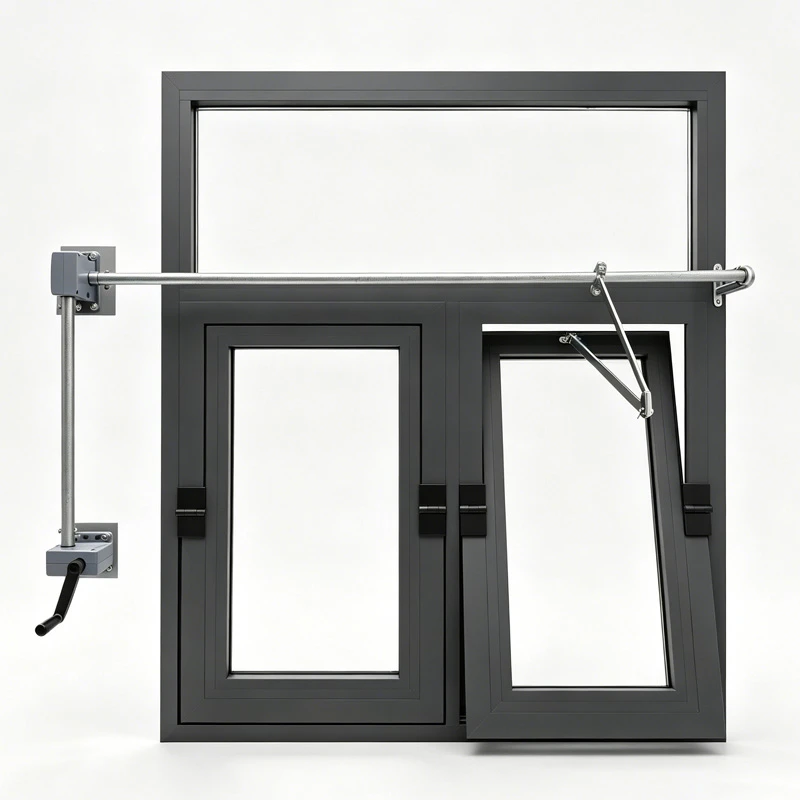
Hinged swing opening with excellent sealing and wide ventilation. Ideal for bedrooms and living rooms in low- to mid-rise residential buildings. Available in thermal-break or non-thermal-break profiles.
2. Sliding Windows
Horizontal track operation, space-saving, easy to operate. Suited to balconies, kitchens, corridors, and large exterior openings in industrial plants.
3. Tilt-and-Turn Windows
Dual-mode: casement and top-hung. No outward-fall risk in high-rise use; tilted position offers draft-free ventilation. The standard safety choice for high-rise residences.
4. Top-Hung Windows
Opens outward from top hinges, providing rain shelter with ventilation. Suited to curtain wall windows in public buildings and office towers, as well as basement and plant ventilation.
II. Matching Surface Treatments to Building Requirements
There is no absolute superiority among surface treatments; the core lies in matching them to the building's environmental and positioning needs.
1. Powder Coating: The General-Purpose Choice for Standard Residential Buildings
Formed by electrostatic adhesion and high-temperature curing, powder coating offers a rich color palette with full color customization and easy batch-to-batch color control. Standard weather resistance ranges from 5 to 8 years, extending to over 10 years with premium super-durable powder at outstanding cost performance. It is suited to standard outdoor environments such as ordinary residences, schools, and municipal buildings.
2. Fluorocarbon Coating: The Weather-Resistant Choice for Premium and Extreme Environments
Using PVDF resin as its core film-forming material and complying with AAMA 2605 standards, fluorocarbon coating offers exceptional UV resistance, salt spray resistance, and acid-alkali corrosion resistance, with a service life of 15 to 20 years and excellent self-cleaning properties. It is suited to coastal buildings, super high-rise office towers, and landmark commercial buildings, corresponding to high-rise tilt-and-turn windows and curtain wall top-hung windows exposed to harsh environments over the long term.
3. Anodizing: The Wear-Resistant Choice for Industrial and Interior Applications
Anodizing generates a dense aluminum oxide protective film on the aluminum surface through an electrochemical reaction. As an integral modification of the substrate itself, it eliminates the problem of coating peeling or flaking. The oxide layer is highly hard, wear-resistant, and scratch-resistant, presenting a natural metallic texture. It is suited to sliding windows in industrial plants, interior partition windows, and equipment windows with high wear-resistance requirements.
III. Combined Selection Reference Guide
| Scenario | Recommended Solution | Rationale |
| Standard residential casement/sliding windows | Powder coating | Optimal cost for areas with no significant pollution or heavy UV exposure |
| High-rise residential tilt-and-turn windows | Powder coating for inland areas; fluorocarbon coating for coastal or high-UV areas | Resists salt spray and intense light erosion |
| Commercial building top-hung/casement windows | Fluorocarbon coating | High-altitude strong wind and UV environment, reducing maintenance costs |
| Industrial plant sliding windows | Anodizing or thick-film powder coating | Standard plants require wear and impact resistance; heavily corrosive plants need a balance of corrosion resistance and procurement cost |
Aluminum alloy window selection should not focus solely on the opening function. Surface treatment must be matched to the building's location and operating environment to achieve the optimal balance between performance and cost.